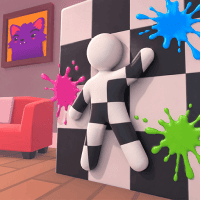
Master the art of camouflage in Chameleon Hide And Seek now. Paint yourself, find the perfect hiding spot, hunt hidden opponents, and survive until the end.
Your objectives in Chameleon Hide And Seek
Inspired by Meccha Chameleon, this game also allows you to take on the role of a hider or a seeker.
Hide carefully
Being a hider in this hide-and-seek game is all about disguise and patience. Your first task is to paint yourself. This allows you to alter your appearance so that you can blend into the environment around you. The idea is similar to camouflage: the better you match your surroundings, the harder you should be to notice. Once you have disguised yourself, you need to choose where to hide. The environment becomes an important part of your strategy because objects and scenery can provide opportunities to make your disguise less obvious. You should think carefully about your position rather than choosing the first hiding place you see. Consider what a seeker is likely to notice when entering the area. A location that looks perfect from your perspective may become suspicious if it is placed somewhere that naturally attracts attention. The objective is to remain undetected until the timer reaches zero.
Find hiders
The role of the seeker completely changes the way you interact with the map. Instead of trying to blend in, you need to examine the environment and locate anything that looks out of place. You can move around the map searching for hiders and shoot them once you believe you have found one. A successful hit transforms the hider into a seeker. This means every discovery makes your side stronger while reducing the number of hidden opponents remaining. However, searching effectively requires observation. A hider may deliberately paint themselves to resemble nearby scenery, making a quick glance insufficient. Look at objects that seem slightly unusual, pay attention to areas where someone could reasonably hide, and avoid assuming that every suspicious-looking object is actually a hider.
How to control
- Arrow keys or WASD keys = Move around
- Shift + Arrow or WASD keys = Run at a fast speed.
- Left click = Shoot or paint.
Various maps in Chameleon Hide And Seek
This multiplayer game features several different environments, giving you a variety of settings for each round. Each map changes the visual environment and therefore affects how you approach hiding and searching.
Maze
The Maze map can create an especially interesting hide-and-seek experience because the layout contains multiple paths and turns. As a hider, you can use the maze structure to find areas where you are less likely to be immediately discovered. As a seeker, the challenge is navigating the maze while checking potential hiding locations. The winding layout can make it difficult to predict where someone has gone, which adds another layer of uncertainty to the search.
Pool Room
The Pool Room provides a very different visual environment. Its recognizable setting can give you specific objects and spaces to consider when choosing a disguise. For seekers, the challenge is learning how the environment normally looks. Once you understand the visual patterns of the map, unusual objects may become easier to identify.
Backroom
The Backroom map offers an enclosed environment where the surroundings can make hiding and searching feel more tense. As a hider, you need to consider how well your disguise matches the area. As a seeker, you should examine spaces carefully instead of assuming that a seemingly empty section contains nothing suspicious.
City
The City map introduces a more open and varied environment. Buildings, streets, and surrounding objects can create different opportunities for hiding. This can make disguise especially important because the environment provides more visual elements to work with. Seekers need to examine the surroundings and determine whether an object genuinely belongs in its location.
Museum
The Museum offers another distinctive setting filled with visual details. As a hider, these details can provide opportunities to blend into the surroundings. For seekers, the abundance of objects can make detection more challenging. You may need to slow down and compare what you see rather than immediately moving toward the next area.